
ELSA Speak: English Learning
ELSA SpeakEducation
4.63.87K Reviews
- Version
- 9.1.8
- Installs
- 10.00M
- Age Rating
- Everyone
Screenshots

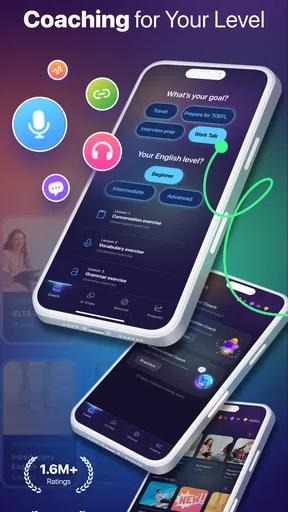
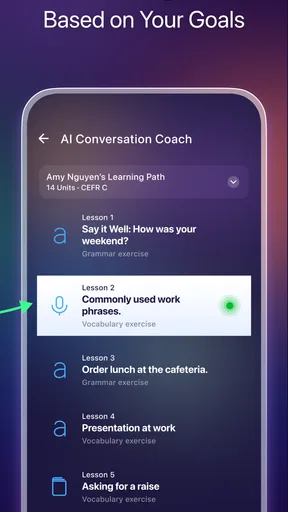
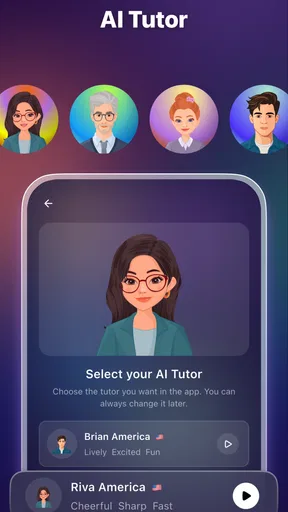
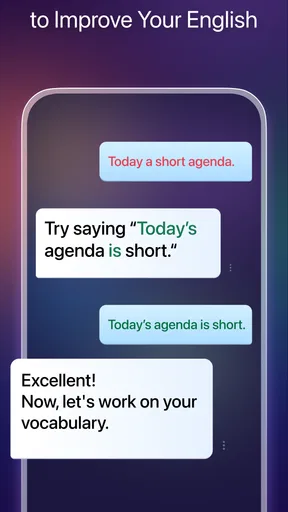
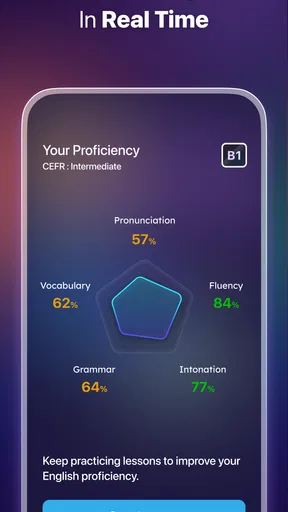
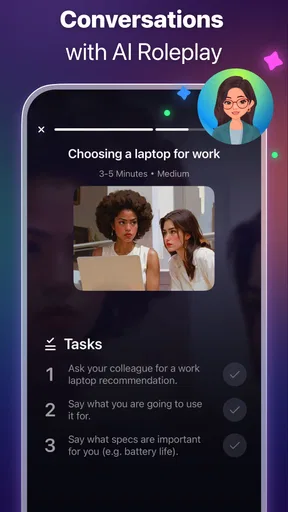

Our Review of ELSA Speak: English Learning
 Analysis by Appyee
I’m looking at ELSA Speak: English Learning mainly as a speaking practice partner: the kind of tool I’d open when I have a few spare minutes and want to work on how English sounds, not just review written vocabulary. Its focus makes it more specific than a general language course, and that can be a real advantage if pronunciation is what makes you hesitate in conversation. It is an education app from ELSA Speak, and the core idea is to practise speaking and receive feedback rather than simply read explanations.
How practice feels from one session to the next
My expectation for speed is modest and practical: I want to get into a short exercise without turning a quick break into a setup session. The app’s initial assessment gives the practice a personal starting point, while its bite-sized lesson approach suits brief visits. I wouldn’t treat a fast score or a single exercise as evidence that my spoken English has changed; the useful measure is whether I can recognise a recurring difficulty and practise it deliberately over time.
The app has a 4.6 average from around 970,000 ratings, and it has passed 10 million installs. Those figures suggest that it has found a broad audience, though popularity can’t tell me whether its speaking feedback will suit every accent, microphone, or learning goal. I’d judge that for myself by trying a few different exercises and checking whether the feedback gives me something specific I can act on.
Starting with a useful baseline
Opening the app for the first time, I was greeted with a clean and intuitive interface. It’s like the app knew exactly what I needed. Right from the start, ELSA Speak sets you up with a quick assessment to gauge your current English speaking skills. This isn’t just a random quiz—it’s personalized, which is a huge plus.
The app uses AI technology to pinpoint your pronunciation errors. I was a bit skeptical at first, thinking, "How accurate can this really be?" But after the assessment, I was genuinely impressed. It highlighted areas I didn’t even know needed work!
For a fair tryout, I’d take the assessment somewhere reasonably quiet and speak at my normal pace. Then I’d repeat a short phrase once or twice, rather than rushing through several lessons. That gives me a clearer sense of whether a correction is understandable and repeatable. If I’m tired, distracted, or speaking very softly, I wouldn’t overinterpret an awkward result; I’d try again when I can give the exercise my attention.
Useful practice for real conversations
Once I got into the lessons, I realized the app is structured in a way that feels less like a classroom and more like a conversation with a friend. Each lesson is designed around real-world scenarios, from ordering coffee to making small talk at a party. This contextual learning makes it super relatable and useful.
One of my favorite features is the instant feedback. You know that feeling when you say something in a foreign language, and you have no idea if you got it right? ELSA Speak solves that. It breaks down each word and even syllables, showing you exactly where you need to improve.
That kind of close attention is most valuable when I can use it to notice a pattern, not when I chase a perfect result on every attempt. I’d pick one difficult sound or phrase, listen carefully to the guidance, and then try saying it in a fresh sentence. The transfer matters: being able to repeat a prompt is helpful, but being understood in an unscripted conversation is the bigger goal.
Building a routine without turning it into homework
The app encourages you to practice daily, but it does so in a way that’s not overwhelming. It sets achievable goals, so I never felt like I was cramming for an exam. Plus, there are these mini-games and challenges that make learning feel more like playing.
Another cool aspect is the community feature. You can connect with other learners, share your progress, and even compete in challenges. It adds a social element that’s surprisingly motivating.
A realistic routine could be a short practice during a commute break, lunch pause, or quiet moment before a call. I’d avoid speaking exercises when I can’t comfortably talk aloud; silently tapping through an activity won’t replace pronunciation practice. If daily reminders help, I’d keep them only if they feel encouraging. When they become background noise, adjusting or ignoring them is better than letting a notification dictate whether the habit feels successful.
What the speech feedback can and cannot do
Now, let's talk about the tech. ELSA Speak uses advanced speech recognition technology. It’s not just about recognizing words; it’s about understanding them. The app listens to your pronunciation and provides feedback that’s both specific and actionable.
I found myself replaying certain phrases just to see if I could get that perfect score. It’s kind of addictive, in a good way. Plus, the AI adapts to your learning style, which means each session feels tailored to your needs.
Still, I wouldn’t use a pronunciation score as the final judge of whether I sound natural. Speech recognition can be affected by room noise, device placement, speaking volume, and the particular way someone pronounces English. If feedback seems inconsistent, I’d reposition the phone, slow down slightly, and repeat the same line once before deciding whether I need to work on it. That small check helps separate a pronunciation issue from an imperfect recording.
Choosing the right tool for your goal
Compared with a broad language-learning app, ELSA Speak is better suited to someone who already wants to practise producing English aloud and needs targeted pronunciation feedback. A conventional course may be a better fit if the main need is grammar explanations, reading practice, or a guided path through several language skills. A human tutor is stronger when I need flexible conversation, follow-up questions, and feedback on meaning or tone. I see this app as a focused practice tool, not a replacement for every kind of English learning.
It should appeal most to learners who understand English reasonably well but hold back because they’re unsure how a word sounds, as well as people preparing for everyday interactions where clear speech matters. It may be less satisfying for someone who wants open-ended conversation as the main activity, or who needs a teacher to explain why a particular expression is appropriate in context. In those cases, I’d pair pronunciation practice with conversation or structured lessons elsewhere rather than expecting one app to cover everything.
Keeping expectations realistic on different devices
ELSA Speak is free to download, with in-app purchases ranging from $0.99 to $849.99 per item. I’d explore the available practice first and check any purchase details carefully before committing, especially if I’m only testing whether the feedback style works for me. The app is rated for Everyone, and its current version is 8.1.7, with Android support listed from version 7.0. That gives older compatible Android devices a route to use it, but compatibility alone doesn’t guarantee the same responsiveness on every phone.
For smoother voice practice, I’d close anything I don’t need, use a stable connection if an exercise depends on online processing, and give the microphone a clear view of my voice. I wouldn’t assume the app is malfunctioning just because a session feels slow in a weak-signal spot or a noisy room. If it stalls, I’d first retry after moving somewhere quieter or reopening the exercise; if the same problem persists, checking for an app update and restarting the device are sensible basic steps. These are general troubleshooting habits, not a promise that every interruption has the same cause.
My performance verdict
After spending a good chunk of time with ELSA Speak, I can honestly say it’s more than just an app—it’s a comprehensive learning tool. Whether you’re a beginner or looking to polish your skills, it offers something valuable for everyone.
So, if you're like me and want to tackle English pronunciation with a bit of fun and a lot of efficiency, give this app a go. Who knows, maybe you’ll find yourself speaking with confidence in no time!
Oh, and before I forget, make sure to keep your notifications on because those reminders are super helpful in keeping you on track. Trust me, you won't regret downloading it. Happy learning!
My more measured recommendation is to try it when you have a clear speaking goal: perhaps making a phone call, introducing yourself at work, or feeling less self-conscious ordering something in English. Practise the relevant phrases, then test the same sounds in your own words. That workflow makes feedback more useful than collecting scores for their own sake, and it gives me a concrete way to notice progress outside the app.
Who will get the most from it
If you enjoy learning by repeating speech and adjusting one detail at a time, this format can make practice feel manageable. It is especially handy when I don’t have a partner available and want immediate guidance on a spoken attempt. The trade-off is that a prompt-based exercise can’t fully recreate the pace, interruptions, and uncertainty of talking with another person. I’d use it to prepare for real conversations, then make room for actual conversation too.
For a beginner, the initial assessment and contextual prompts can offer a less intimidating entry point than being dropped into a live conversation. But a beginner who needs every sentence translated or wants grammar taught step by step may find a pronunciation-first approach incomplete. I’d choose a broader course in that situation and return to ELSA when speaking clarity becomes a more specific concern.
Making each minute count
One useful habit is to keep a small personal list of words that repeatedly trip me up, then use practice sessions to revisit them rather than treating every lesson as unrelated. I can also note the setting where I want to use each word, such as a meeting or a travel question. This connects isolated sound practice to a practical goal and makes it easier to tell whether I’m improving in the situations that matter to me.
I’d also avoid doing a long run of repetitions after my attention fades. A few careful attempts, with a brief pause to understand the feedback, are more informative than repeating a phrase mechanically. If I can’t hear the difference the app is pointing out, I can slow down and focus on one part of the word rather than guessing at the entire sentence. The point is not to sound identical to a model, but to speak clearly and confidently in my own voice.
Final thoughts on speed and reliability
For quick, focused pronunciation work, the app’s format is appealing because I can move between assessment, a lesson, and a repeat attempt without needing to arrange a class. The experience depends on being able to speak aloud and capture a usable recording, so it is not equally convenient in every environment. I’d expect a quiet room and a steady pace to produce a more useful session than trying to practise beside traffic or in a crowded room.
Overall, I’d recommend it as a focused companion for English speaking practice, particularly for learners who want specific feedback and can build a simple routine around it. I wouldn’t choose it as my only resource if I needed broad instruction, natural back-and-forth conversation, or a teacher who can adapt explanations on the spot. Used for what it does best—and balanced with real speaking opportunities—it can make otherwise vague pronunciation goals feel much more actionable.
Verdict
Strengths of ELSA Speak: English Learning
- User-friendly interface, easy navigation.
- AI-powered feedback for accurate learning.
- Diverse exercises for all skill levels.
- Tracks progress with detailed analytics.
- Offline mode for learning on the go.
Limitations of ELSA Speak: English Learning
- Limited free content; subscription needed.
- Requires stable internet for best results.
- Voice recognition can be inconsistent.
- Pronunciation focus; lacks grammar lessons.
- No live interaction with native speakers.
Similar Picks in This Category
View All
Duolingo: Language Lessons
Duolingo4.7

Google Classroom
Google LLC2.8

Unacademy: Learn & Crack Exams
Unacademy3.2

Bible App for Kids
Life.Church4.4

Cake - Learn English & Korean
Cake Corp.4.7

Brainly: AI Homework Helper
Brainly4.5
Frequently Asked Questions
What is ELSA Speak and how does it help with learning English?
ELSA Speak is an AI-driven English learning app designed to help users improve their pronunciation and speaking skills. By analyzing your speech, it provides real-time feedback and personalized lessons to enhance your fluency and accuracy. It’s particularly beneficial for non-native speakers looking to refine their accent and gain confidence in speaking English.
Does ELSA Speak offer courses for different levels of English proficiency?
Yes, ELSA Speak caters to various levels of English proficiency, from beginner to advanced. The app tailors its lessons based on your initial assessment, ensuring that you receive content that matches your current skill level. This personalized approach helps users progress efficiently, no matter where they start on their English learning journey.
Is ELSA Speak free to use, or does it require a subscription?
ELSA Speak offers both free and premium subscription options. The free version provides limited access to features and lessons, whereas the premium version unlocks comprehensive content, including advanced lessons and detailed feedback. Users can choose a subscription plan that fits their learning needs and budget, with options for monthly or annual payments.
What devices are compatible with the ELSA Speak app?
ELSA Speak is available for both Android and iOS devices. Users can download the app from the Google Play Store or Apple App Store. It is optimized for smartphones and tablets, ensuring a seamless learning experience across different devices. Regular updates keep the app compatible with the latest operating systems.
Can ELSA Speak help improve my accent, and how accurate is its feedback?
ELSA Speak is specifically designed to help with accent reduction. It uses artificial intelligence to provide precise feedback on pronunciation errors. The app highlights specific sounds and syllables that need improvement, allowing users to practice until they achieve the desired accent. Its accuracy in detecting speech nuances makes it a valuable tool for language learners focused on pronunciation.
